Foundation walls
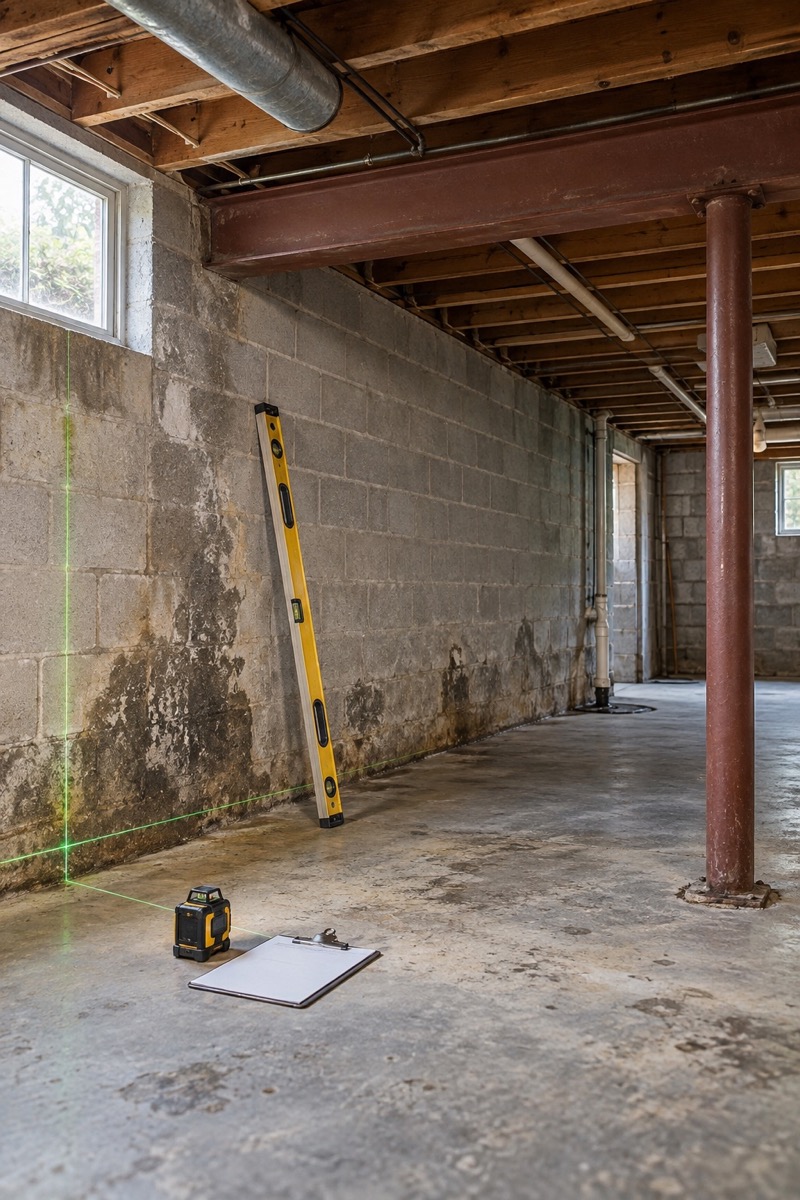
Visible cracking, displacement, bowing and other distress patterns.
Foundation inspections in Pittsburgh and Southwestern PA
Foundation problems rarely announce themselves clearly, and what appears minor on the surface can indicate deeper structural concerns below grade. An independent foundation inspection identifies structural concerns, considers potential causes and provides a professional engineering evaluation of the home’s foundation.
Schedule an inspection when cracks appear, doors stop closing properly or you need an objective evaluation before purchasing a property.
We evaluate foundations. We don’t sell foundation repairs.
The inspection visually examines foundation walls, floor systems and drainage conditions around the home’s perimeter. Measurements document movement or deflection and help determine whether the conditions reflect normal settlement, ongoing structural stress or a stability concern requiring intervention.
Visible cracking, displacement, bowing and other distress patterns.
Floor framing and supports for movement connected to the foundation below.
Crack widths, wall deflection and other indicators that establish current conditions.
Exterior grade, drainage patterns, water entry and staining considered alongside structural symptoms.
Clay-heavy soils common throughout Pittsburgh and southwestern Pennsylvania expand and contract with moisture changes, creating pressures that affect foundation performance differently than sandier ground.
The evaluation documents visible distress patterns, considers how those patterns developed and determines whether they suggest active movement or historical settlement that has stabilized. Measurements establish baseline conditions when a crack must be monitored or movement after a previous repair must be evaluated.
After the inspection, you receive a written report detailing the findings, identifying probable causes based on observed evidence and explaining whether the situation requires immediate attention, continued monitoring or routine maintenance.
For properties changing ownership, the report gives buyers and sellers an objective assessment separate from contractor estimates.
The report identifies the structural concerns requiring attention.
Current measurements establish a baseline for tracking change.
The findings may support routine maintenance or observation.
The inspection does not include invasive probing or excavation. Findings are based on accessible, visible conditions at the time of evaluation. If subsurface investigation is needed to understand soil behavior or locate hidden structural elements, that would be recommended as a separate step.
“I had Mr. Miller inspect a property that has some foundation issues. He arrived at the agreed upon time, explained during the inspection what was happening with the foundation and provided a written report within one week detailing his findings and the recommended remedy.”
The engineer visually examines foundation walls, floor framing and exterior grade conditions, takes measurements of deflection or cracking, and documents drainage patterns that may contribute to movement or moisture intrusion.
An independent inspection evaluates the structure rather than selling a repair solution. Already have a contractor’s quote? A second opinion on foundation repairs can confirm whether the proposed work is necessary.
The report documents observed conditions, explains probable causes and recommends whether repairs are necessary now, should be monitored or fall within normal building movement.
Inspections can be conducted year-round. Late winter and early spring often reveal pronounced movement because freeze-thaw cycles and spring moisture can stress foundations already affected by surrounding soils.
The report identifies structural concerns and their likely causes so you can make informed decisions about stabilization, waterproofing or drainage improvements based on engineering findings.