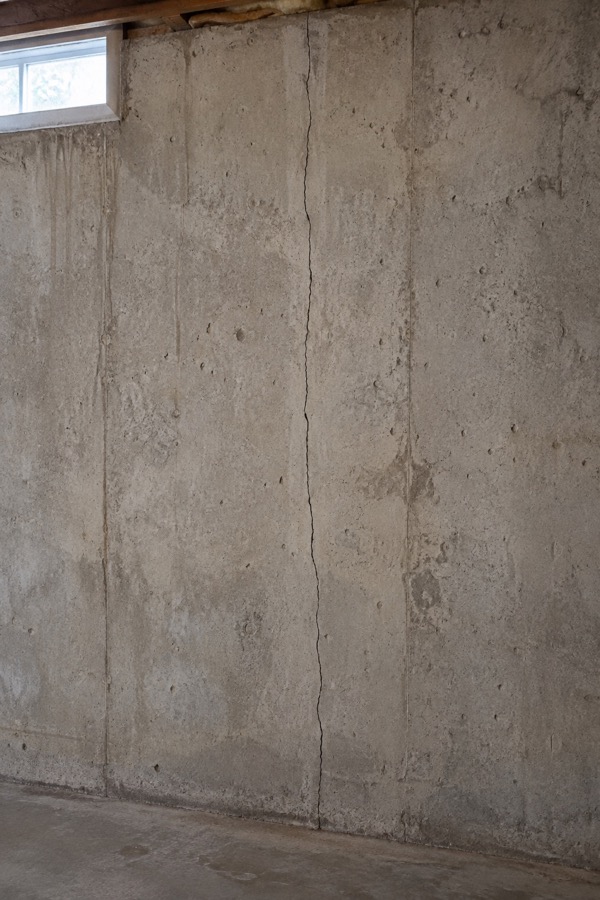
Vertical cracks: often shrinkage
Vertical cracks near corners commonly develop as poured concrete cures. Small, stable cracks may pose minimal structural risk, but width, displacement and water entry still matter.
Foundation crack inspections in Pittsburgh and Southwestern PA
A new or widening crack can be difficult to interpret from appearance alone. We evaluate the pattern and movement to distinguish normal shrinkage from settlement, soil pressure or another structural concern, then explain what should happen next.
We evaluate foundations. We don’t sell foundation repairs.
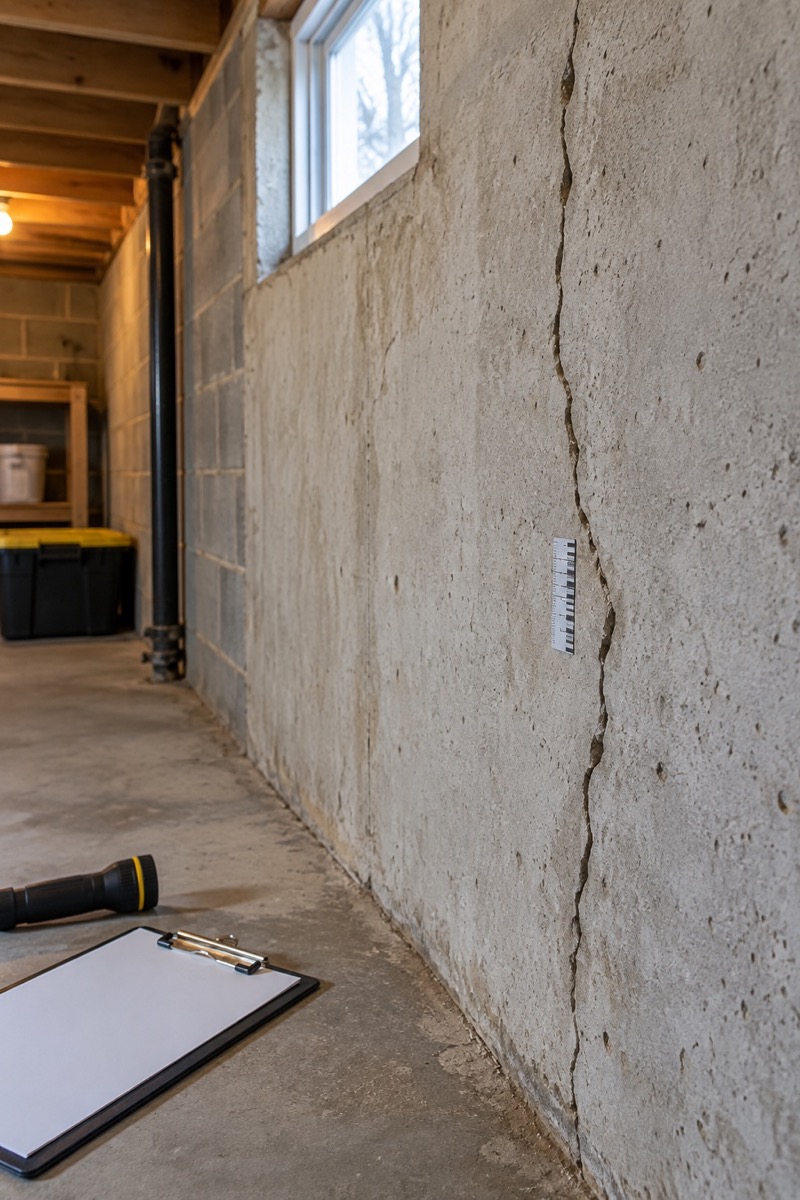
The inspection begins with the crack itself: its width, direction, location, displacement and any evidence that it is changing. Those details help reveal how the foundation may be moving.
Cracks wider than one-quarter inch, those running diagonally across walls, or separations that continue to widen over months warrant closer examination to rule out ongoing foundation movement.
We also consider whether water is entering through the crack and whether related conditions appear elsewhere in the foundation. The goal is to determine the likely cause before deciding whether sealing, monitoring or structural attention is appropriate.
Each crack pattern reflects different structural behavior. Correct interpretation determines whether the condition is a cosmetic annoyance, evidence of a one-time event, or a symptom of progressive movement.
Vertical cracks near corners commonly develop as poured concrete cures. Small, stable cracks may pose minimal structural risk, but width, displacement and water entry still matter.
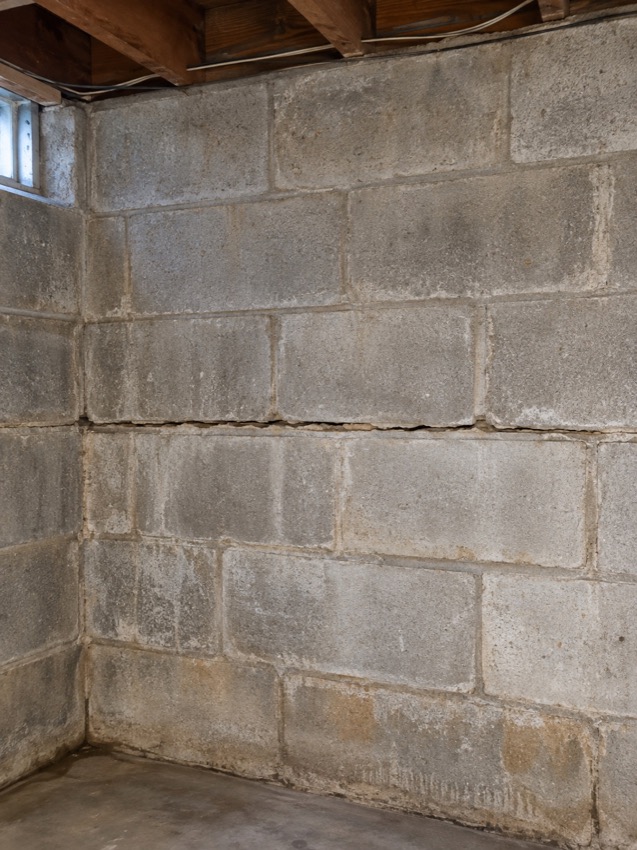
Horizontal cracks at mid-height can suggest inward bowing from lateral soil pressure and may be more structurally significant than normal shrinkage cracking.
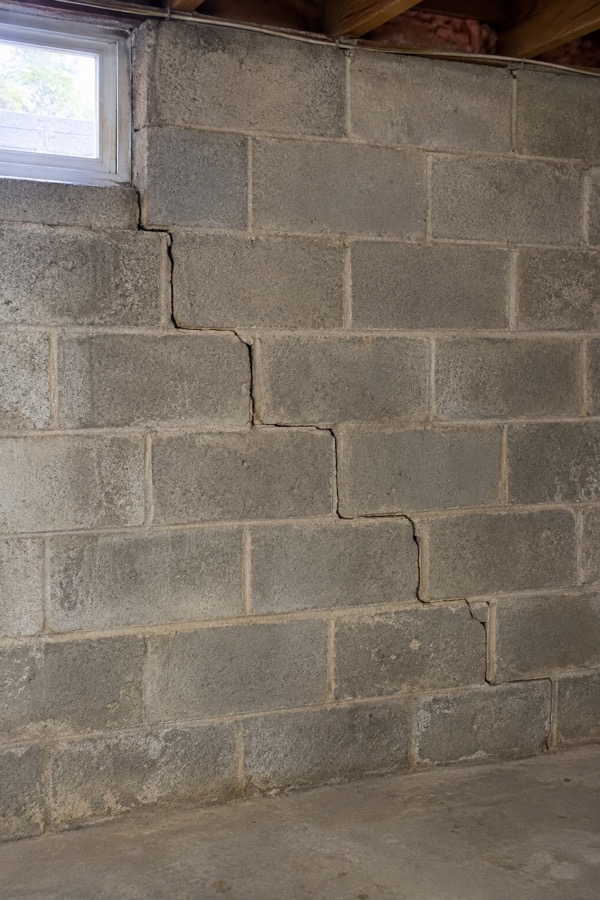
Cracks radiating from window corners or stepping through masonry joints can indicate one section of the foundation has dropped relative to another.
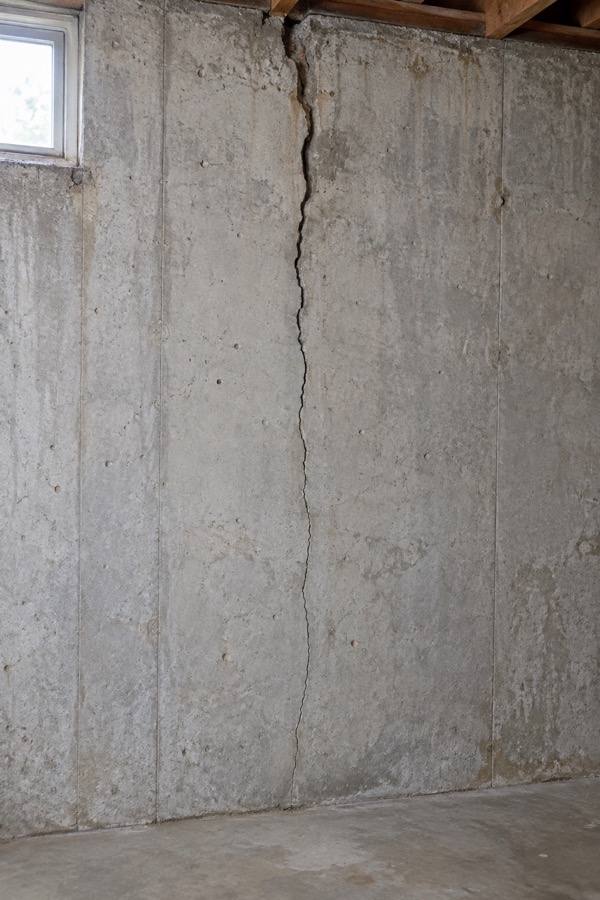
A vertical crack that is wider at the top than the bottom can indicate that the wall is rotating outward at its base.
How large the opening is and whether it exceeds what is typical for shrinkage.
Whether the crack is vertical, horizontal, diagonal or stair-stepped through masonry.
Whether one side has moved inward, outward, upward or downward relative to the other.
Whether the crack is stable or continuing to widen as soil and moisture conditions change.
After inspection, you will understand whether the crack developed from a one-time event that has stabilized, such as initial settlement after construction, or from ongoing movement that will continue without intervention.
This clarity helps prevent unnecessary repairs when cracks are inactive and identifies conditions where monitoring or stabilization should be considered before further displacement occurs. You will also learn whether simple sealing is sufficient or structural reinforcement should precede cosmetic repair.
Already have a repair quote from a contractor? A second opinion on foundation repairs can help determine whether the proposed work is warranted by the observed conditions.
More about foundation inspections →“We hired Gary Miller because he was a neutral party. He came out, looked at the wall, and said the wall was fine. Lesson is cement basement walls which are over 60 yo will move slightly and it does not mean it will fall.”
Cracks wider than one-quarter inch, particularly those showing vertical offset where one side is higher than the other, generally warrant engineering evaluation because they suggest movement beyond normal shrinkage.
Crack monitors or simple reference marks placed across the crack allow measurement over weeks or months to confirm whether the separation is widening, which indicates active foundation movement rather than historical settlement.
Foundation movement from soil consolidation, changes in moisture conditions around the foundation, or deterioration of drainage systems can cause cracking long after construction. This is especially relevant in Pittsburgh and Southwestern PA, where clay soils shift with seasonal wet-dry cycles.
Sealing a crack while it is still moving will result in the sealant failing as displacement continues. Confirming the crack has stabilized or addressing the underlying movement should occur before permanent sealing work.
Horizontal cracks typically indicate lateral pressure from soil pushing against the wall. This is more structurally concerning than vertical shrinkage cracking because it suggests the wall may be loaded beyond its design capacity.
Independent evaluations before you buy, build, repair or renovate. Gary J Miller, PE tells you what the structure actually needs, with no repair systems to sell.